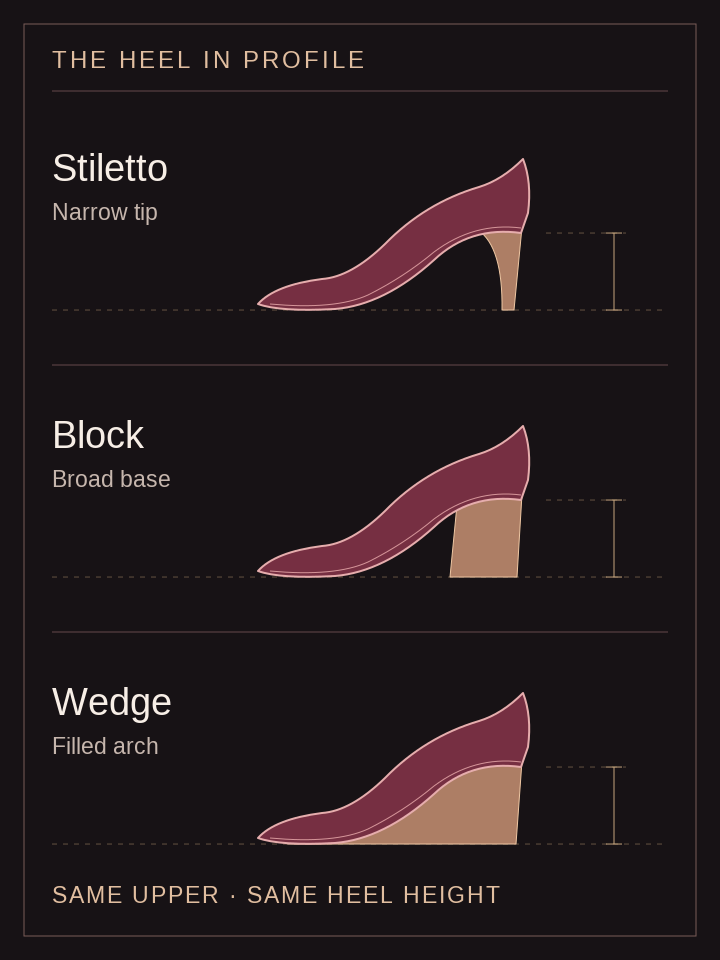
01 · Shape. Start under the arch. In the drawing, the upper and heel height stay the same. The stiletto tapers to a narrow tip; the block heel keeps a broad base; the wedge fills the space under the arch with a continuous sole. Follow the gap between shoe and floor: that’s where the three profiles part ways.
02 · Height. Look at how far the heel seat sits above the floor. Then look under the toes. A platform adds thickness under the forefoot, so two shoes with the same heel height can have a different rise from forefoot to heel. When comparing a pair online, check the front sole alongside the stated heel height.
03 · Shoe style. Look at what holds the shoe on the foot. A classic pump has a closed back and slips on. A slingback leaves the back open and holds the foot with a strap around the heel. A mule leaves the back open with no rear strap. A block-heel slingback is both: ‘block’ tells you about the base, ‘slingback’ about the back. ‘Pointed’ tells you about the toe.
Try naming a pair you already own: shape, height, style. Then look at a second pair and see which descriptor changes. The names tell you what to look for in a photograph; judge fit on your own foot.
Source: American & Efird · Footwear glossary
Source: CHARLES & KEITH · Heel shapes and terminology