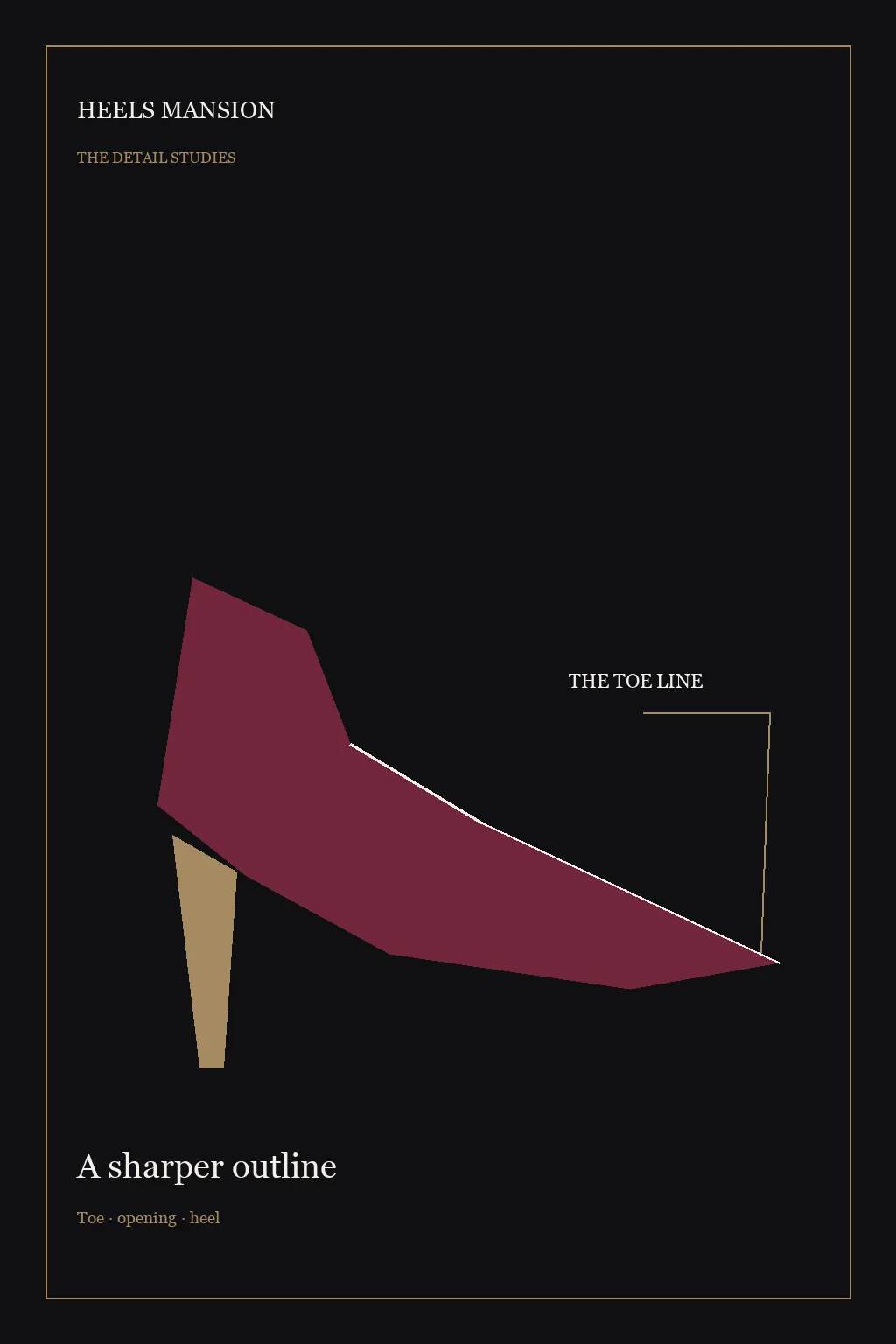
A pointed pump can look severe, delicate or almost architectural. Heel height alone does not explain the difference. Start with three lines: the toe, the opening around the foot and the profile of the heel. Our illustration separates those elements; it is a shape study, not a specification for a shoe you can buy.
The toe is the most obvious place to start. Look at how quickly the sides narrow, rather than only at the final tip. A gradual taper makes a different outline from a short toe that turns sharply inward. Neither is automatically the better choice. The useful comparison is between the shoe and the hem above it: does the toe remain visible, or does it disappear beneath the trousers?
Next, follow the opening. Seen from above, it frames the top of the foot. Seen from the side, it becomes part of the line between the upper and the ankle. Before calling two black pumps interchangeable, compare this edge. In an outfit with very little colour contrast, it may be the detail you notice most.
Then turn the shoe sideways. A straight, slender heel creates one kind of visual rhythm; a curved or broader profile creates another. Think of it as a conversation with the toe. A narrow front and narrow heel repeat a sharp idea. A fuller heel under a pointed front introduces contrast. These are observations about appearance, not promises about stability or comfort.
You can make the comparison at home without buying another pair. Photograph the shoe from above and from the side, then try it with a long trouser hem and a shorter skirt. Keep the distance and light similar. Look at the whole outline before zooming into details: the shoe that wins the close-up may not be the one you prefer in the full outfit.
Finish with the question that matters when wearing it. Does this particular shape belong with the clothes and the day you have planned? Fit, walking and the surfaces on your route still need a real try-on. A sharp silhouette is a design choice, not an instruction to spend the evening in an uncomfortable shoe.