Heels vs flats
for work.
How to choose for your day.
Neither heels nor flats are the right choice for every workday. Start with your workplace’s dress code, how much walking and standing your day involves, and the fit of the particular pair. Then compare the silhouette with the clothes you plan to wear.
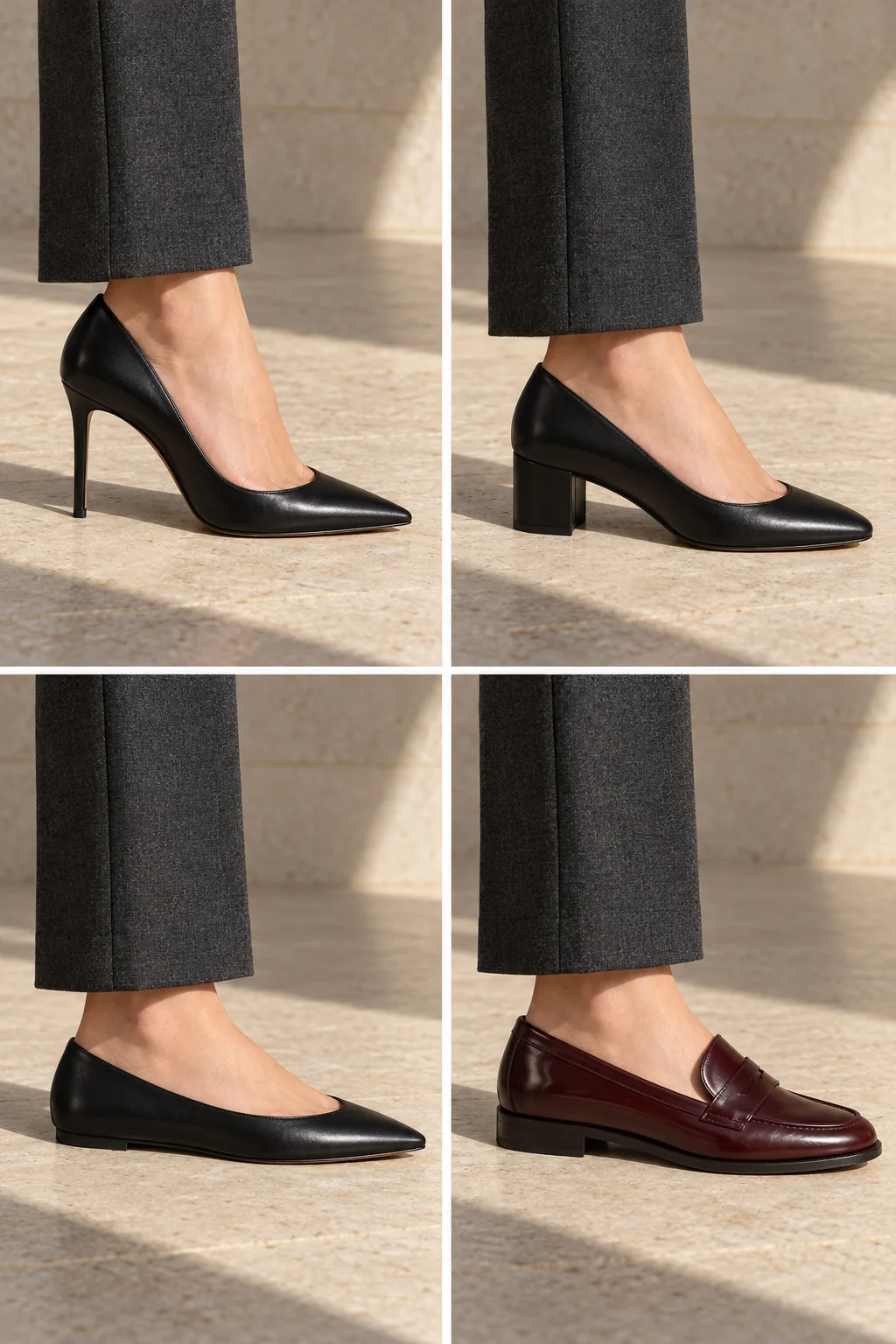
Heels vs flats at a glance
Different outlines, different questions. None of these labels guarantees comfort or decides what your employer requires.
| Shoe | The line it makes | What to check |
|---|---|---|
| Pointed pump | Pointed toe, raised heel, narrow back line. | Toe room, heel fit and the actual route. |
| Low block heel | Raised profile with a broader heel shape. | Fit and grip; width alone is no comfort guarantee. |
| Pointed flat | A taper at the front with little lift at the back. | Toe space, secure fit and trouser clearance. |
| Loafer | Covered vamp, visible band and fuller toe. | Heel movement, toe room and hem length. |
Choose for the day you actually have
A shoe that works between your desk and a meeting room has not necessarily earned its place on the walk to the station. Before choosing a heel height, separate your day into the journey, the hours at work and whatever follows. Include the stairs, outdoor surfaces and standing you normally forget when getting dressed. This is an outfit decision with a route attached, not a contest between sensible and stylish.
For a mostly seated office day, compare the pairs you already know fit you with the trousers or skirt you intend to wear. For a walking-heavy day, start with the pair you can actually walk in without pain, not the one that wins a close-up. If you have never worn it for that route, leave room for a shorter trial rather than assuming a shoe category guarantees an all-day result.
Desk day + short journey
Start with known fit. Compare the silhouette with your actual hem and choose the pair you want to wear, within the workplace’s requirements.
Stations, stairs + walking
Give the route priority. Use a pair you already know works for that amount of walking, or plan a change at the office. Do not set a universal step limit.
Presentation or interview
Check the dress code and rehearse the complete outfit. Decide on neatness, proportion and fit, not the idea that more heel equals more authority.
Office straight to dinner
Try the shoes with the coat and bag as well as the outfit. If you plan to switch pairs, check both hems and make room for the second pair before leaving.
The same tailoring, four different lines
Our four editorial studies keep charcoal trousers and a neutral floor as the common reference. They show different shoe shapes, not a controlled wear test, a particular brand or an exact measured heel height. Use them to see what you want to compare in a mirror; do not use them to infer which pair would fit your foot.
The pointed pump repeats a narrow line at the toe and heel. The low block heel changes the back of that outline without abandoning a raised heel. The pointed flat retains the taper at the front but brings the back close to the floor. The loafer adds more coverage across the top of the foot, a rounded front and a visible band. The useful question is which of those lines belongs with your clothes, not which one makes the wearer more professional.
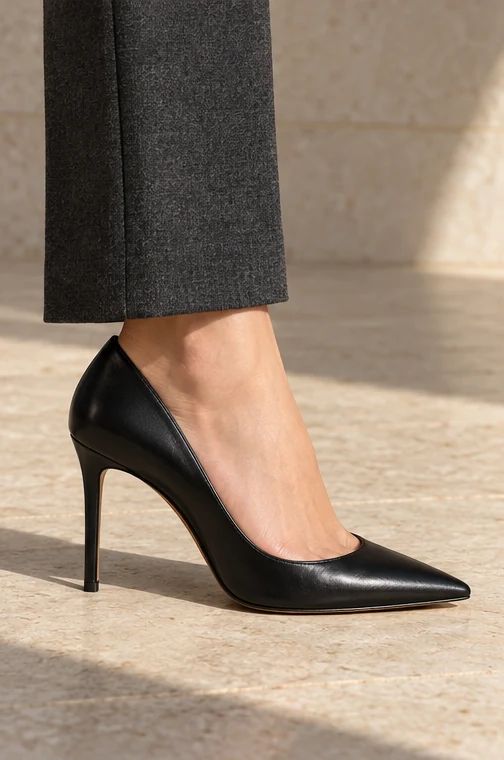
The pointed pump
Compare the toe with the trouser hem and the opening with the ankle. Choose it because you like that outline and the particular pair works for you, not because the room supposedly requires it.
Before you wear it
Try the route, not just the mirror. A slim heel is a shape, not a promise of ease.
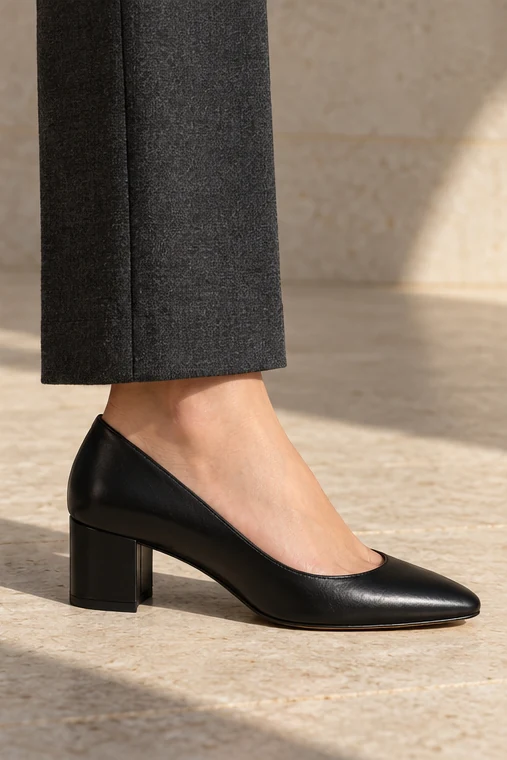
The low block heel
A broader heel changes the visual weight at the back of the shoe. With straight trousers, look at the balance between that base, the toe and the amount of fabric near the floor.
Before you wear it
Inspect fit and sole grip separately. A wider heel alone does not prove comfort or safety.
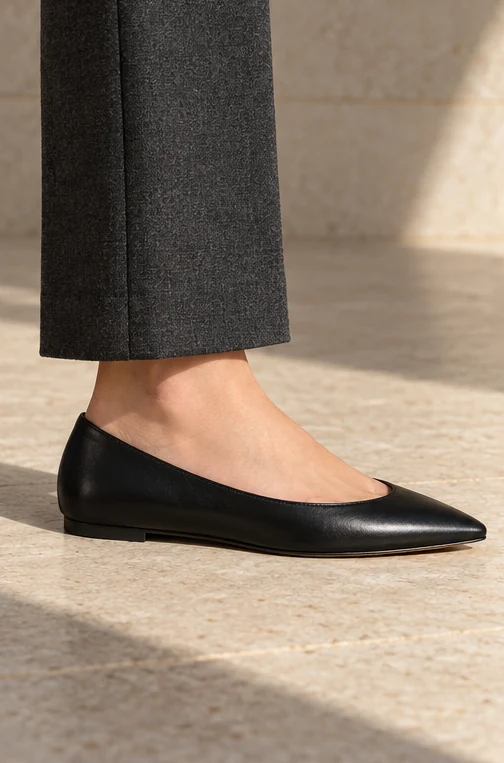
The pointed flat
Keep the pointed front while changing the line at the back. Check your hem again when moving from a heel to a flat: the same trousers may sit nearer the floor.
Before you wear it
Look for enough toe room and a secure fit. Flat does not automatically mean comfortable.
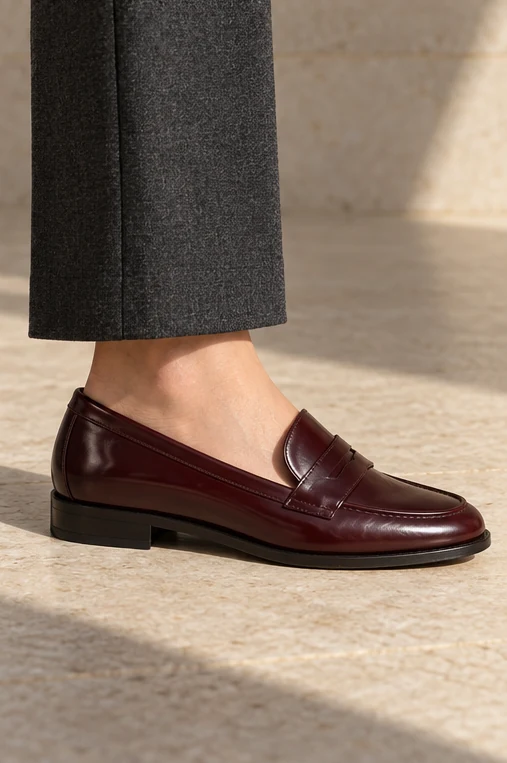
The loafer
The covered vamp and band give the shoe a stronger horizontal detail. Compare how much of it remains visible under the trousers; do not rely on colour alone to decide the balance.
Before you wear it
Try walking and turning. An easy slip-on should not require you to grip with your toes.
Look at the hem before the heel
With a long straight trouser, start at floor level. Check whether the back of the hem drags when you change into flats, and whether a higher shoe lifts more of the ankle into view than you intended. One trouser length may not behave the same way with both pairs. Take a full-length photograph in each, from the same distance, rather than comparing two unrelated product shots.
Then look from the front. How much toe is visible? Does the hem cover the opening of the shoe, or leave a clear break above it? With a skirt or a cropped trouser, the opening and ankle become a larger part of the composition. A low shoe can still make a precise line; a high shoe can still look visually heavy. Colour, toe shape and coverage belong in the comparison alongside height.
Are flats professional enough for work?
Flats can be part of a polished work outfit. A clean, well-kept loafer or pointed flat can sit deliberately with tailoring; it does not need a heel to make the combination look considered. That is a styling judgment, not a promise about every employer’s policy. Check the actual dress code, the kind of work you do and any safety requirements before choosing a pair for a new setting.
For an interview or presentation, remove avoidable uncertainty: try the whole outfit beforehand, including the shoe you will arrive in. Notice the trouser length, condition of the sole and whether the shoe stays on your foot as you walk. Do not turn an assumption about a profession into a rule that women must wear heels. Equally, do not assume an ordinary fashion flat meets the protective-footwear requirements of a particular job.
What heel height cannot tell you
The category label leaves a great deal out. Two flats can differ in toe room, cushioning, fastening and how securely they hold your foot. Two pumps can share a heel height and still have a different opening, upper and overall fit. A block heel describes the shape of the heel; it is not a certificate of comfort, grip or suitability for your route.
During a try-on, walk, turn and sit in the pair. Notice pressure at the toes, rubbing at the heel and whether you grip to keep the shoe on. Read the maker’s guidance for care and intended use. No universal number of centimetres, steps or standing hours settles the decision for everyone. We have not wear-tested or medically assessed the shoes depicted here and do not rank them by pain, support or durability.
When pain changes the question
If your feet hurt, the question is no longer simply which silhouette you prefer. The NHS guidance for heel pain recommends wide, comfortable shoes with a low heel and soft sole, and advises against high heels or tight, pointy shoes while managing that complaint. This is advice for heel pain, not a finding that every flat is healthy or every heel causes a problem.
Do not use a styling guide to diagnose pain or to push through it. The NHS advises getting medical help for symptoms that are severe, keep returning, or do not improve, and gives separate urgent-care advice for injuries and difficulty walking. Follow the source’s guidance or a qualified clinician rather than selecting a shoe solely from this comparison.
Clinical source: NHS: heel pain and when to get help. Read 18 October 2026. Editorial guidance is not personal medical advice.
Questions before you leave
Are flats or heels better for a full day at work?
There is no category-wide winner. Compare the specific pair’s fit with your walking, standing, surfaces and workplace requirements. If you have pain, seek appropriate advice rather than choosing by appearance alone.
Can I wear flats to an interview?
Flats can work with a polished interview outfit. Check the employer’s actual dress code, choose a well-kept pair and try it with the whole outfit. This is styling guidance, not a guarantee about an employer’s expectations.
Are block heels always more comfortable than stilettos?
No blanket comfort claim follows from heel shape. Fit, toe room, the upper, sole and your individual experience still matter. This page compares silhouettes; it does not report a wear test.
Should I change shoes for my commute?
A second pair is an option if one pair does not suit both the journey and your plans at work. Check trouser length with both pairs, allow time to change and think about carrying the spare pair.
What heel height is best for the office?
This guide does not prescribe one height for everyone. Begin with your workplace’s requirements and your own fit and movement needs. For heel pain, refer to clinical guidance, not a fashion rule.
The choice is yours, not the shoe’s
A work shoe does not have to settle an argument about ambition or femininity. It has to belong to your clothes, your workplace and the day you actually have. Keep the silhouette you enjoy; give the route and the fit an honest vote.
Source: NHS · Heel pain: footwear and when to seek help
Read next
The room after yesWhat makes a pointed pump look sharp?Follow Heels Mansion editorial in your feed reader.
Follow the stories · RSS