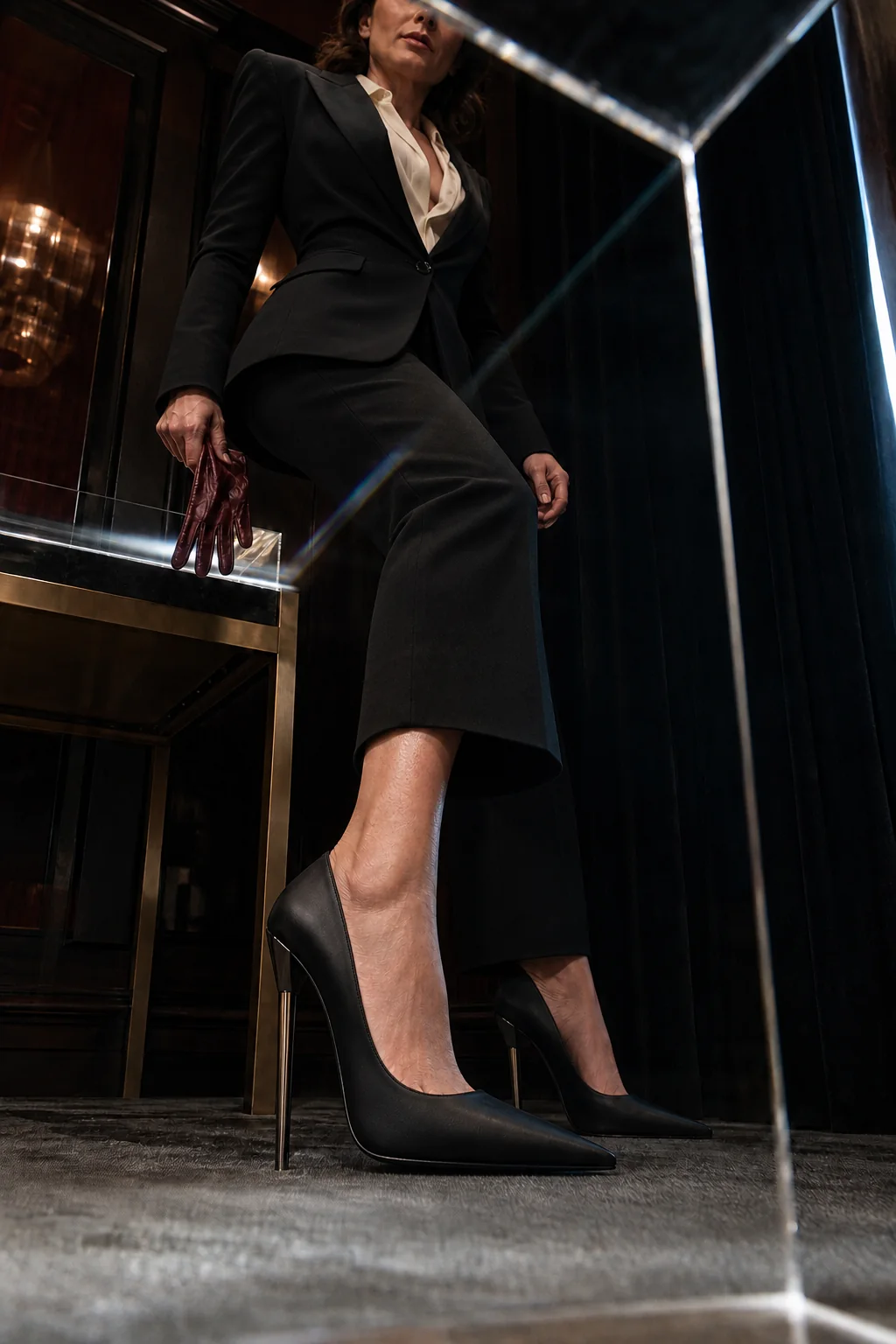
Choosing heels for work means thinking past the meeting. There is the walk from the station, the time spent standing and the question of what to wear when the day runs late. A pair that feels right at nine can be a different proposition at six.
Start with the route rather than the outfit. A desk day with a short walk asks something different of your shoes than a day split between stations, stairs and appointments. Think about the part of the day you usually leave out when getting dressed: the pavement outside the office, the queue for lunch, the journey home.
Then look at the shape. The pointed pump draws the eye along the front of the foot; a narrow heel gives the back of the shoe a sharply defined line. Under a trouser hem, much of the shoe may disappear. With a shorter hem, the heel and the space around it become part of the silhouette. You can try both in the mirror before deciding which proportion you prefer.
Colour changes the decision too. Black tailoring with black pumps lets texture do the talking: the weave of the cloth, the surface of the shoe, a small reflection at the toe. A contrasting shoe gives the eye a separate place to land. Neither choice needs a special occasion, but each asks for a different balance in the rest of the outfit.
Then there is the dress code, written or otherwise. A pointed pump may be your favourite part of an outfit. It can also be something you put on because you expect the room to notice. Deciding which is true for you is worth a moment before leaving home. The useful question is personal: would you reach for this pair if the meeting disappeared from your calendar?
Keep the rest of the day in the picture. If you are going straight to dinner, try the shoes with the coat and bag you will actually carry. If you plan to change, make room for the second pair before you leave. That practical detail can make the evening feel less like an extension of the office.
The meeting ends. You can keep the heels on for dinner or change into the flats in your bag. The outfit has already done its job. What happens next belongs to the person wearing it.